How Long Does a MRI on the Brain Take?
A brain MRI is one of the most common imaging tests doctors use to examine the brain and surrounding tissues. Many people feel nervous before getting an MRI because they do not know what to expect or how long the procedure will take. Understanding the process can help reduce stress and make the experience easier.
A brain MRI is painless, non-invasive, and usually completed within a short period of time. However, the exact duration depends on several factors such as the type of MRI, whether contrast dye is used, and the patient’s ability to remain still during the scan.
This guide explains everything you need to know about brain MRI timing, preparation, procedure, recovery, and frequently asked questions.
What Is a Brain MRI?
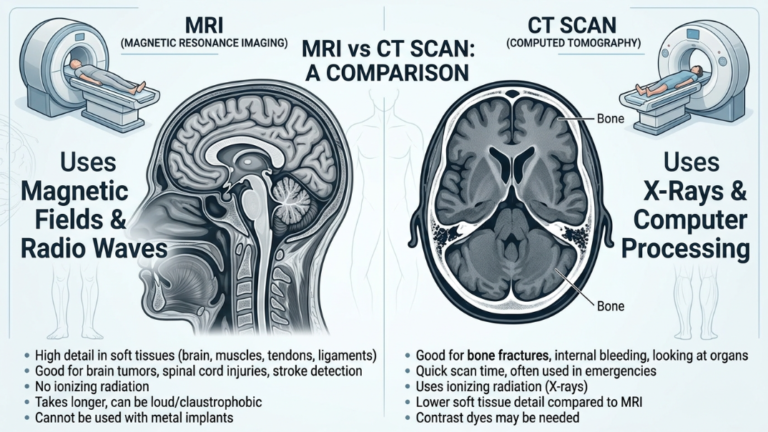
MRI stands for Magnetic Resonance Imaging. It is a medical imaging test that uses powerful magnets and radio waves to create detailed images of the brain.
Unlike X-rays or CT scans, MRI does not use radiation. Doctors commonly recommend a brain MRI to diagnose conditions such as:
- Headaches
- Stroke
- Brain tumors
- Multiple sclerosis
- Brain injuries
- Seizures
- Memory problems
- Infections
- Blood vessel abnormalities
A brain MRI provides highly detailed images that help doctors identify problems accurately.
How Long Does a MRI on the Brain Take?
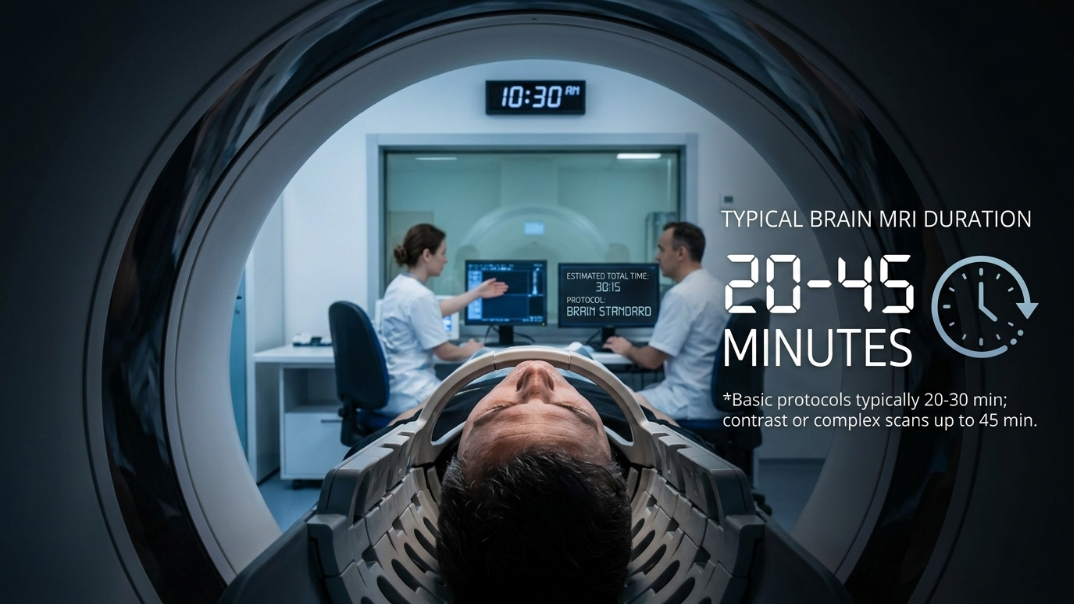
In most cases, a brain MRI takes between 30 and 60 minutes.
The timing depends on the type of scan being performed and whether contrast material is needed.
Here is a general estimate:
| Type of Brain MRI | Average Time |
|---|---|
| Standard brain MRI | 20–45 minutes |
| Brain MRI with contrast | 45–60 minutes |
| Functional brain MRI | 60–90 minutes |
| Emergency MRI | 15–30 minutes |
Some scans may finish faster, while others can take longer if additional images are required.
Why Does MRI Time Vary?
Several factors affect how long a brain MRI takes.
1. Type of MRI
A simple MRI usually takes less time than a specialized scan. Advanced imaging requires more detailed pictures, which increases scan duration.
2. Use of Contrast Dye
Doctors sometimes inject a contrast agent into a vein to improve image quality.
MRI scans with contrast usually take longer because:
- The dye must be administered
- Additional images are needed
- Doctors may compare images before and after contrast
This can add 15–30 minutes to the appointment.
3. Patient Movement
MRI machines require patients to remain still. Movement can blur the images and force technicians to repeat parts of the scan.
If someone moves frequently, the procedure may take longer.
4. Claustrophobia or Anxiety
Some patients feel anxious inside the MRI machine because it is narrow and enclosed.
If a patient becomes uncomfortable, the scan may pause temporarily, increasing the total time.
5. Sedation
Children or anxious adults may receive sedation to help them stay calm and still.
Sedation preparation and recovery can add extra time to the overall visit.
What Happens During a Brain MRI?
Knowing what happens during the procedure can help you feel more comfortable.
Step 1: Preparation
Before the MRI begins:
- You may change into a hospital gown
- Jewelry and metal objects must be removed
- You may answer safety questions about implants or medical devices
Metal can interfere with MRI magnets, so informing the technician about implants is important.
Step 2: Lying on the MRI Table
You will lie on a padded table that slides into the MRI scanner.
Your head may be placed inside a special device called a head coil, which helps produce clearer images.
Step 3: The Scanning Process
The machine creates loud tapping or knocking sounds during imaging.
You may receive:
- Earplugs
- Headphones
- Music in some facilities
The technician monitors you from another room and can communicate through an intercom.
Step 4: Staying Still
Remaining still is extremely important for accurate images.
Even small movements can affect image quality and increase scan time.
Is a Brain MRI Painful?
No, a brain MRI is not painful.
Most people only experience minor discomfort from:
- Lying still for a long time
- Loud machine noises
- Feeling confined in the scanner
If contrast dye is used, you may feel a small pinch during the injection.
Brain MRI With Contrast vs Without Contrast
Doctors decide whether contrast dye is necessary based on the medical condition being evaluated.
MRI Without Contrast
This type of MRI uses magnetic fields alone to create images.
It is commonly used for:
- Headaches
- Dizziness
- Minor neurological symptoms
These scans are usually shorter.
MRI With Contrast
Contrast-enhanced MRI uses a dye called gadolinium.
It helps doctors detect:
- Tumors
- Infections
- Blood vessel problems
- Inflammation
This process takes longer because additional images are captured after the injection.
How to Prepare for a Brain MRI
Preparation is usually simple.
Before Your Appointment
You may need to:
- Avoid wearing metal accessories
- Inform staff about implants or pacemakers
- Tell your doctor if you are pregnant
- Mention kidney problems if contrast dye is planned
Most patients can eat and drink normally unless sedation is required.
Clothing Tips
Wear comfortable clothes without metal zippers or buttons.
Some hospitals provide gowns for all MRI patients.
What Does a Brain MRI Feel Like?
During the scan, you may notice:
- Loud rhythmic noises
- Slight table vibrations
- Warm sensations in some areas
However, the procedure itself does not hurt.
Some people feel anxious because of the enclosed space, but many complete the scan without problems.
Can You Move During a Brain MRI?
You should avoid movement as much as possible.
Movement can:
- Blur images
- Delay results
- Require repeated scans
If you need assistance during the procedure, you can usually speak to the technician through the intercom.
How Long Does a Child’s Brain MRI Take?
Children’s MRIs may take longer because younger patients often need sedation to remain still.
Typical timing:
| Procedure | Time |
|---|---|
| Standard pediatric MRI | 30–60 minutes |
| MRI with sedation | 1–2 hours total visit |
The extra time includes preparation and recovery from sedation.
What Happens After the MRI?
Most patients can return to normal activities immediately after the scan.
If sedation was used, someone may need to drive the patient home.
There is usually no recovery period for standard MRI procedures.
How Long Does It Take to Get Brain MRI Results?
MRI images are reviewed by a radiologist.
Results are often available within:
- 24–48 hours for routine scans
- A few hours for emergency cases
Your doctor will explain the findings and discuss any necessary treatment.
Are Brain MRIs Safe?
Brain MRIs are considered very safe.
Because MRI uses magnets instead of radiation, there is no radiation exposure like with CT scans or X-rays.
However, MRI may not be suitable for people with certain metal implants or devices.
Always inform medical staff about:
- Pacemakers
- Cochlear implants
- Metal fragments
- Surgical clips
Tips to Stay Calm During a Brain MRI
If you feel nervous about the scan, these tips may help:
- Practice deep breathing
- Keep your eyes closed
- Listen to music if available
- Focus on relaxing your muscles
- Ask about open MRI machines
Some facilities also offer mild sedatives for anxious patients.
Open MRI vs Traditional MRI
Traditional MRI machines are narrow tunnels, while open MRI systems have more space.
Open MRI Benefits
- Better for claustrophobic patients
- More comfortable for larger individuals
Traditional MRI Benefits
- Produces sharper images
- Faster scanning in many cases
Your doctor chooses the best option based on your medical needs.
Common Reasons Doctors Order a Brain MRI
Doctors may recommend a brain MRI for many symptoms and conditions, including:
- Chronic headaches
- Vision problems
- Seizures
- Weakness
- Memory loss
- Confusion
- Balance issues
- Stroke symptoms
MRI helps identify underlying causes that may not appear on other tests.
Risks of Brain MRI
Brain MRI has very few risks.
Possible concerns include:
- Anxiety in enclosed spaces
- Rare allergic reaction to contrast dye
- Discomfort from lying still
Serious complications are extremely uncommon.
Frequently Asked Questions
Can a brain MRI take longer than an hour?
Yes. Complex scans or MRIs with contrast may exceed one hour.
Do brain MRI results come immediately?
Usually not. A radiologist needs time to review the images before sending results to your doctor.
Can I sleep during a brain MRI?
Some people do fall asleep during the scan, especially during longer procedures.
Is fasting required before a brain MRI?
Most brain MRIs do not require fasting unless sedation or contrast dye is involved.
Are MRI scans noisy?
Yes. MRI machines produce loud tapping and knocking sounds during imaging.
Can I wear makeup during a brain MRI?
Some makeup products contain metallic particles, so hospitals may ask you to remove makeup before the scan.
Is brain MRI safe for children?
Yes. Brain MRI is generally safe for children and does not involve radiation.
What should I do if I am claustrophobic?
Tell your doctor beforehand. Open MRI machines or mild sedatives may help.
How long does a brain MRI with contrast take?
Most brain MRIs with contrast take around 45–60 minutes.
Can I drive after a brain MRI?
Yes, unless sedation was used during the procedure.
Conclusion
A brain MRI usually takes between 30 and 60 minutes, depending on the type of scan and whether contrast dye is required. Although the process may seem intimidating at first, it is painless, safe, and highly effective for diagnosing many brain conditions.
Understanding what to expect before, during, and after the scan can make the experience much less stressful. By staying calm and remaining still, most patients complete their MRI smoothly and return to normal activities shortly afterward.